Open Life Cycle Data for Buildings: Départ de Sentier at Sino-Swiss Exchange in Hangzhou and Shanghai
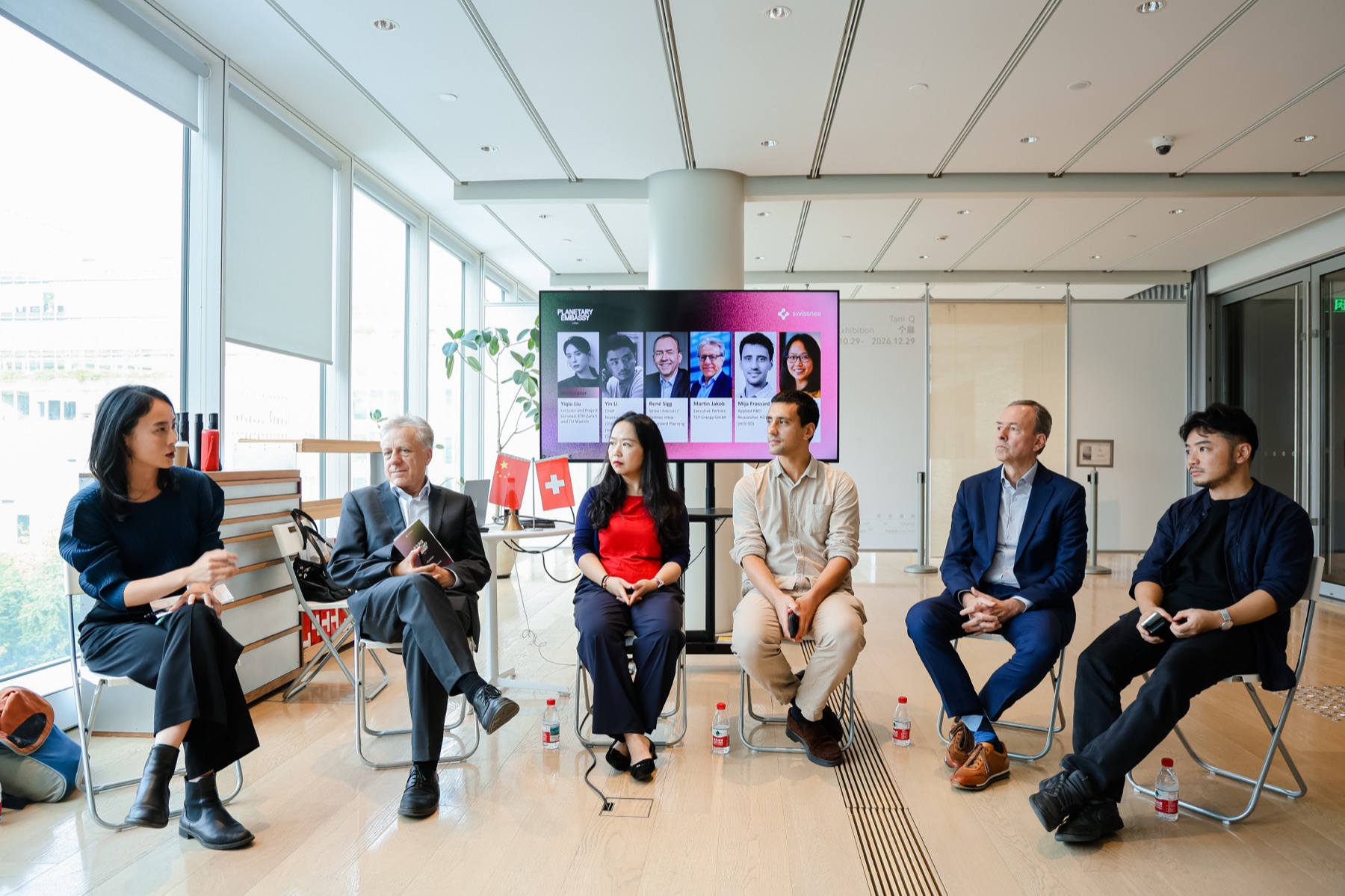
On 30 October 2026, our Director, Xiaojin Zhang, spoke in Hangzhou, China, at Whole-Life Thinking Beyond the Building, a public Sino-Swiss exchange. The event was part of Planetary Embassy China, a flagship initiative of Swissnex in China. Xiaojin joined a Swiss delegation for the exchange on net-zero whole-life carbon buildings, together with Martin Jakob (TEP Energy), Mija Frossard (HEIG-VD, HES-SO) and René Sigg (Intep).
The two-hour session brought Chinese and Swiss researchers and practitioners together around one question: what happens to a building after its useful life? Speakers drew on real-world cases, from large-scale material reuse and deep renovation to zero-emission building pilots and city-level decarbonisation pathways. The programme also covered the energy side of the lifecycle, including district heating and cooling networks, building-integrated photovoltaics and microclimate-responsive design. The session was moderated by Yiqiu Liu (ETH Zurich and TU Munich) and featured Yin Li (International Climate Innovation) and the Swiss delegation. Short talks were followed by a question game and a panel discussion.
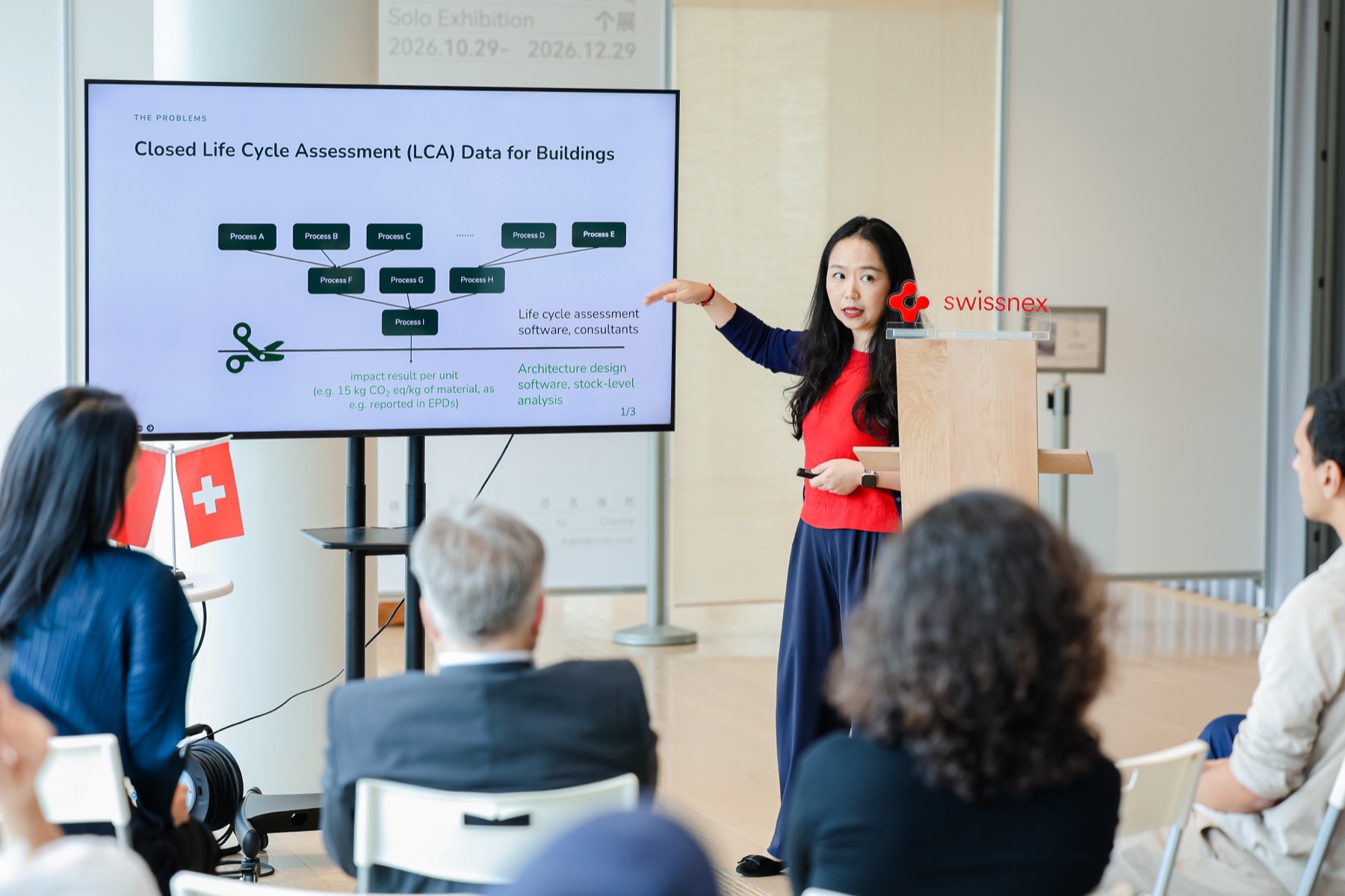
In the talk, Open Life Cycle Data for Buildings: Why and How, Xiaojin started from a familiar problem. Life cycle assessment data for buildings is mostly closed: impact results per unit of material, such as the values reported in environmental product declarations, are fixed numbers that feed architectural design software, stock-level analyses and LCA tools. They sit behind paywalls, cannot be checked and validated by most of the users, and stay frozen between releases.
Open data changes this. It is free for everyone to use, transparent and reproducible, open to community updates and improvements, and anyone can verify it. Xiaojin then showed how Départ de Sentier builds open data in practice with the Sentier Platform: raw data is imported, linked through a shared vocabulary, and turned into inventories, models and impact scores, with open metadata, automated validation and cross-checks against external sources, and human feedback considered at every step.
A field day in Qingshan Village
On 1 November, Xiaojin joined the Planetary Embassy China field day in Qingshan Village, Yuhang District, organised by Swissnex in China together with the Berggruen Institute China’s Co-Becoming project. Qingshan is known for restoring its local reservoir through a community water fund and for art-driven village regeneration. The morning started with a guided hike through the village landscape and was followed by a visit to the RONG Design Library, China’s first library of traditional craft materials.
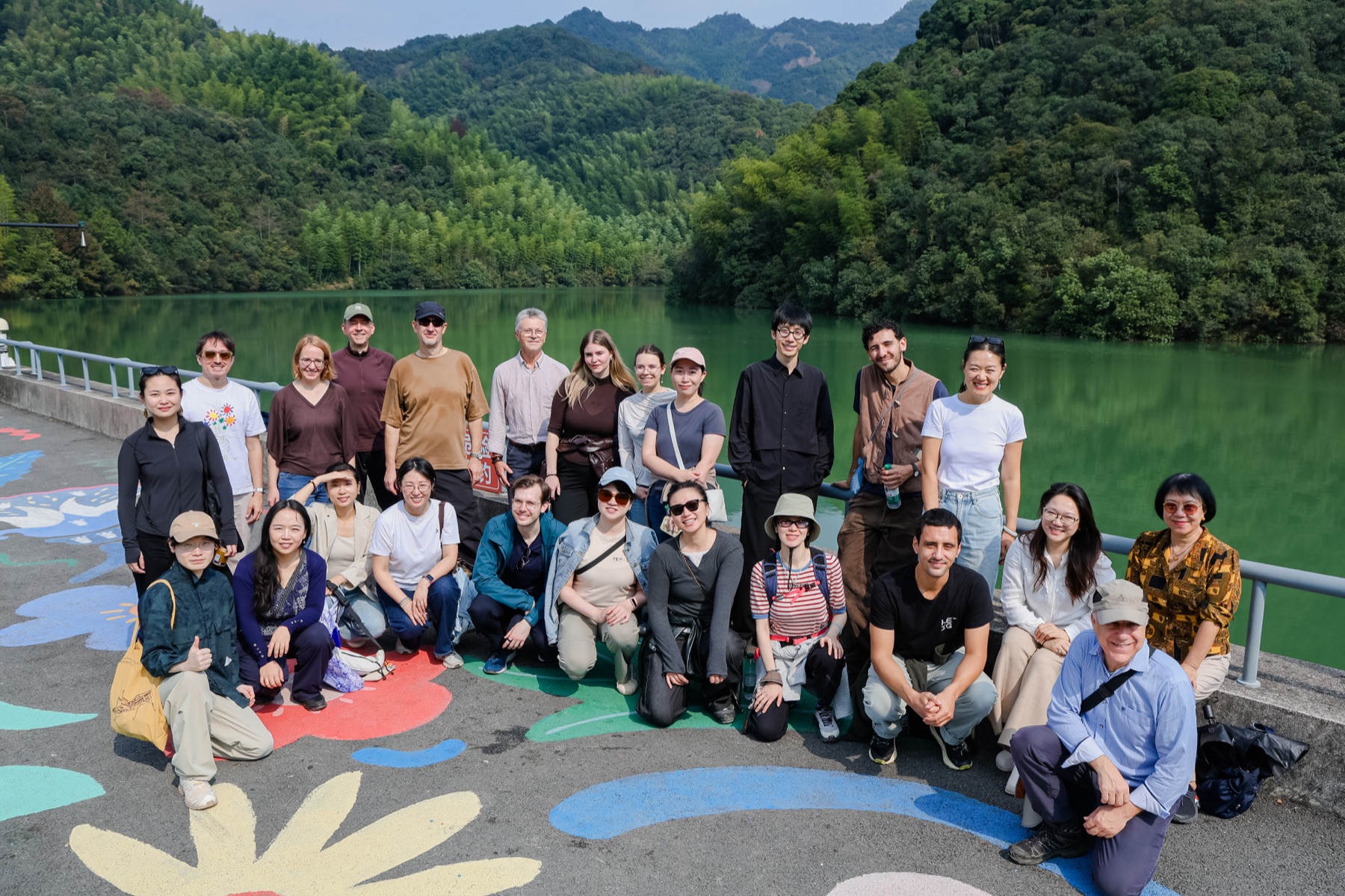
The afternoon was a closed-door workshop, Planetary Roundtable: On Dwelling Together. About 20 participants rotated between three tables on architecture and habitat, nature and landscape, and technology and the future. It was a rare chance to exchange with experts from fields far from LCA, including architecture, art, ecology, philosophy and urban studies.
Exchange with companies and universities in Shanghai
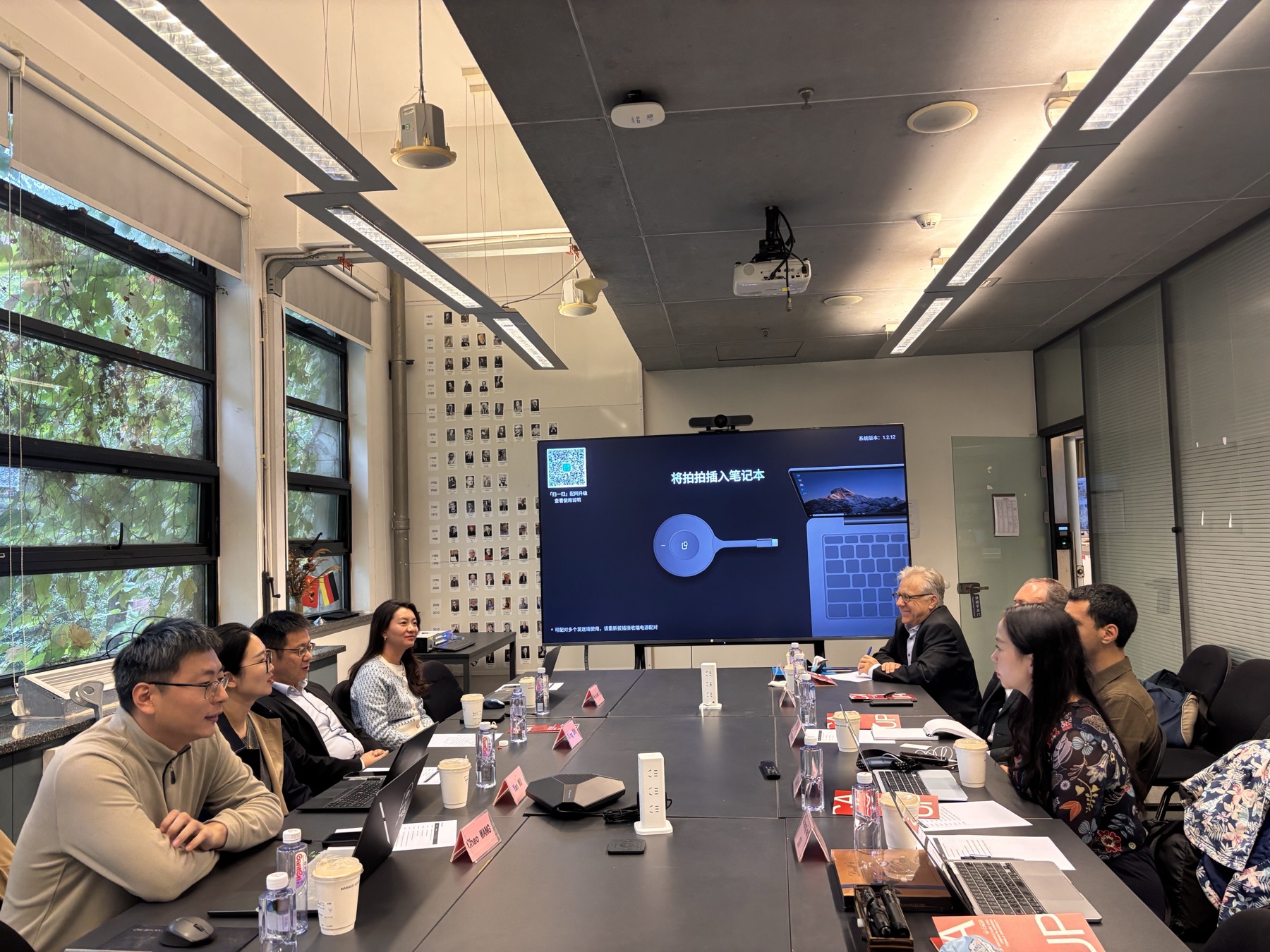
On 2 and 3 November, Xiaojin continued to Shanghai to meet companies and universities, including Shanghai CIRS Sustainability Technology, Shanghai Jiao Tong University and Tongji University. The aim was to understand the building life cycle assessment (LCA) landscape in China and the research behind it, and to explore potential Sino-Swiss collaboration, following the agreement on research and development cooperation Switzerland has signed with China on 30 October.
Many thanks to the Swiss Federal Office of Energy (SFOE) for its support of the trip, and to Swissnex in China that hosted these events. We look forward to collaborating with the Chinese and Swiss building and LCA communities on open life cycle data!