Solving elementary flow mapping with enriched data, transparency and provenance: Tiangong Forum, Nanjing, China
In a room full of LCA developers, one question always comes up: how do we stop wasting time mapping the same substances across different databases?
The problem is simple but frustrating. When one LCIA method uses "1-ethyl-2-methylbenzene" and another database uses "Toluene, 2-ethyl-" to refer to the same chemical, the data stops flowing. It breaks the link between life cycle inventory and the impact assessment, which is essential for correct impact assessment calculations.
At the Tiangong Forum in Nanjing in March, Christopher Mutel represented Départ de Sentier and shared how to solve this issue through a reusable data pipeline based on Semantic Taxonomy.
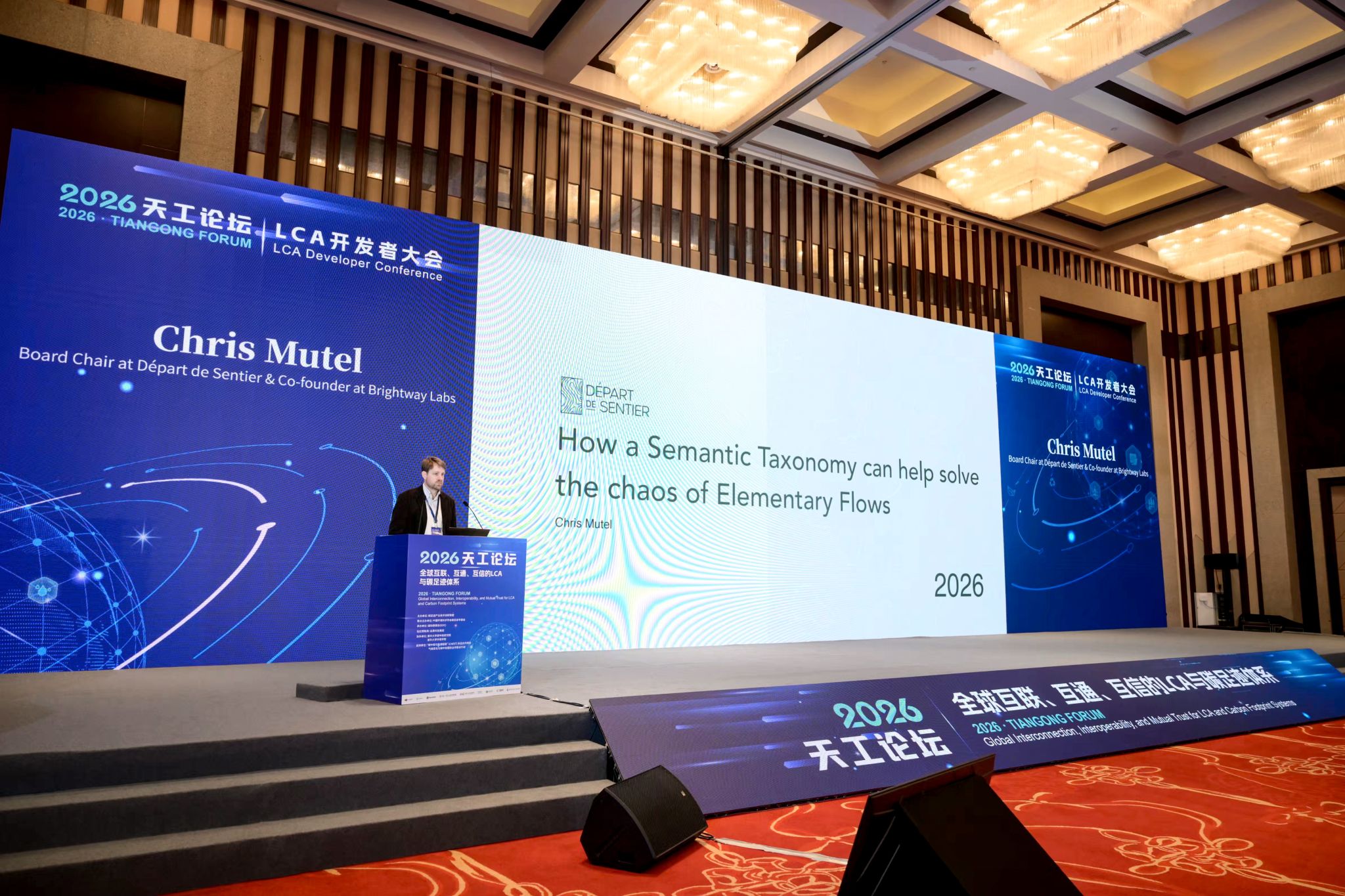
Rather than relying on static mapping files that quickly become outdated across successive updates, we developed a framework that integrates rich information (e.g. synonyms) from established data sources (e.g. PubChem). We also don't assume the full accuracy of individual sources, because things like existing CAS numbers can be wrong. With this, our pipeline better understands substances and their contexts.
The result is a reproducible, consensus-driven flow list with fully transparent provenance, where every change, rationale, and source is clearly documented. Crucially, the framework is designed to evolve, adapting seamlessly as new implementations are introduced.
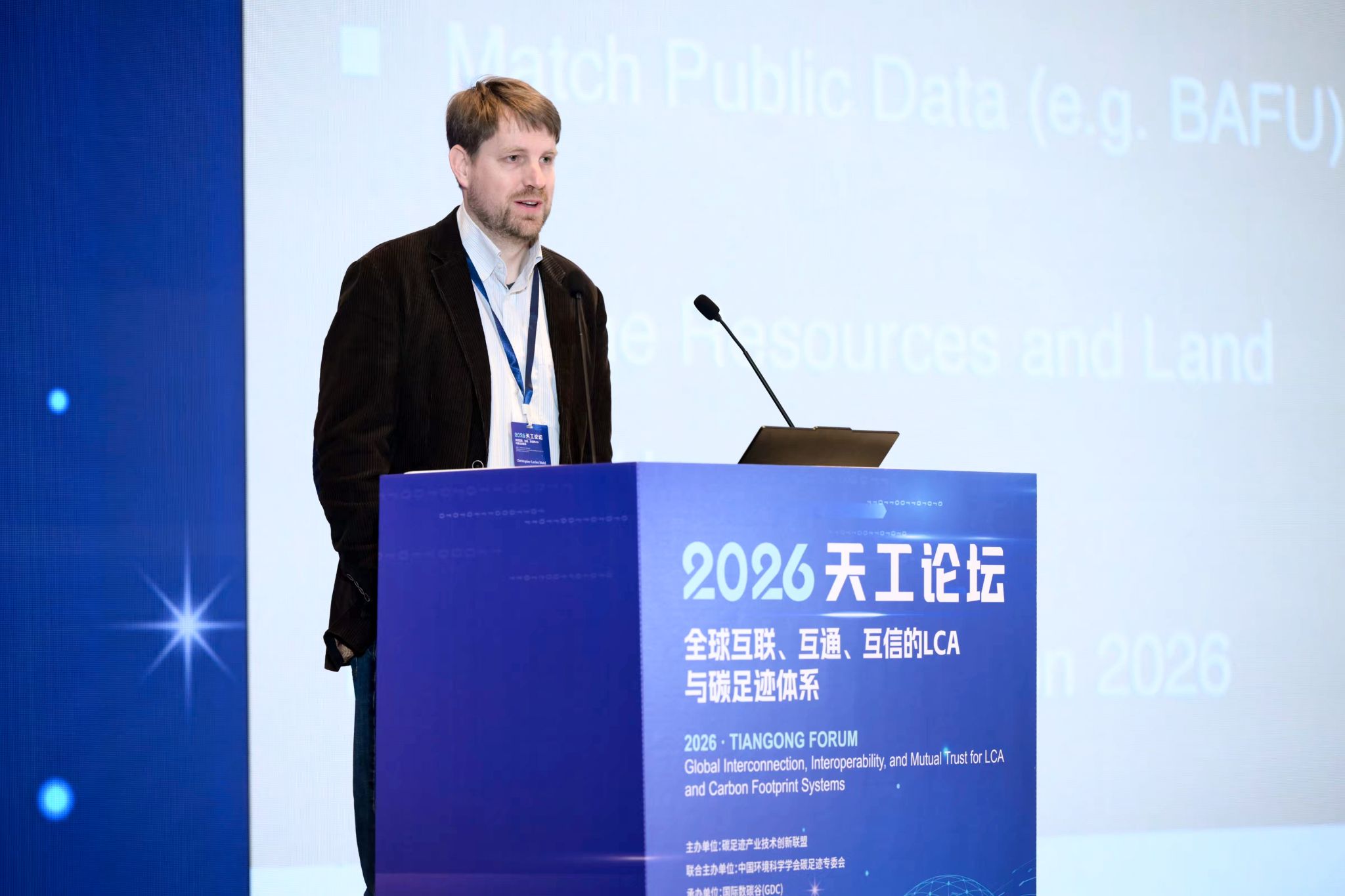
Technical dialogues like these, especially those outside our usual European circle, are vital. Because we believe true interoperability should be bottom-up efforts that require voices from different corners of the globe.
Check out this work: Consensus flow browser